

Working With Creators to Shift Mindsets About Homelessness and Housing Affordability
08/21/2026
By Kriselle Gabriel
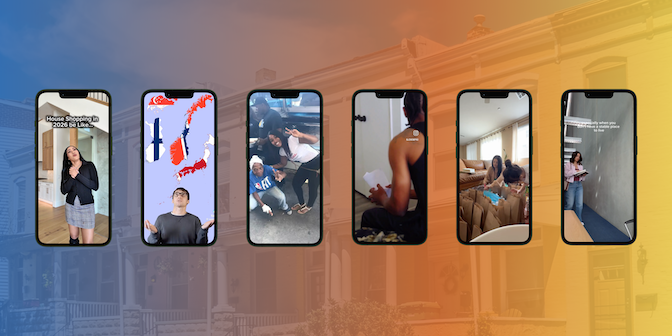
Digital content creators are dominating our algorithms, and non-profit and advocacy organizations increasingly want to work with creators to amplify their messages and priorities. Creators have huge reach and trust among their followers, but most focus on non-political or issue-specific content, such as parenting, home life, travel and exercise. Figuring out how to support creators who want to discuss serious topics, including homelessness and unstable housing, while keeping their audiences engaged and interested was the focus on some exciting work the Lab did this spring.
The Lab’s first content creator cohort included 16 diverse creators from across the country who wanted to learn more about the root causes and health impacts of homelessness and unaffordable housing, and create content about it in their style. Learn more and meet the creators who joined us in part one.
Teach and Let Go
We hosted two training sessions in partnership with the Harvard T.H. Chan School of Public Health to share public health data about homelessness, narrative research about the most effective messages about homelessness and affordability, and examples of how creators could integrate the information into their typical content style organically.
And then we let the creators do what they do best — share insights and information in funny, creative and personal ways. From the start we were clear that we wanted creators to talk about homelessness and housing affordability without changing their style or voice.
All that freedom paid off.
One creator who focuses on family-friendly activities shared a way to talk about homelessness with their kids. Another creator who travels the world shared solutions to homelessness that are working in other countries. One creator is a comedian and made a funny video highlighting the issue without being insensitive.
Several creators shared that the creative freedom to talk about homelessness and housing affordability in their own ways empowered them to publicly share their personal experiences with homelessness for the first time.
Understanding the Impact
After the content was shared, the Lab dug into the data and conducted research to understand the impact of the content, specifically whether it shifted people’s mindsets about the economic causes of homelessness, the role of government in supporting solutions and the role that housing costs play in driving up rates of homelessness.
Here’s what we learned:
We analyzed thousands of comments on the creators’ videos and the main takeaway echoed the Lab’s other research results — people are highly empathetic to the issue of homelessness but are frustrated with the overall system that aims to address it.
Three primary themes emerged in the comments:
- People reject the idea that individual failure and laziness are the main causes of homelessness. People acknowledge that systemic failures play significant roles (rising healthcare costs, job layoffs, etc).
- People are tuned in to the math of survival, noting the gap between stagnant incomes and the immense increase in the cost of living over the past few decades.
- People are tired of theoretical solutions and want tangible, practical solutions. Examples include Finland’s “Housing First” model and churches around the country converting their properties into supportive housing.
Surprising Mindset Shifts
After reviewing the comments, we conducted a series of randomized control message persuasion tests on the top performing videos about homelessness and housing affordability.
Every video in both tests shifted people’s mindsets about the economic factors that contribute to homelessness, like expensive housing and low-paying jobs.
Personal stories about the impact of having safe, stable housing was one of the most impactful ways to shift people’s mindsets about housing as a right and the government’s role in solving homelessness and affordability.
Showing people tangible solutions for homelessness is the best way to move mindsets about the government’s role in solving homelessness.
Examples:
Marie Phan shared a video about making care bags for the unhoused community in Las Vegas while emphasizing that systemic solutions are still needed to solve the root of the problem. This content shifted the mindsets of audiences who have traditionally been least persuadable in other message testing, including men, individuals with a high school education or less, rural residents, people over 55, conservatives, and homeowners. This was one of the most surprising and impactful findings.
Roya shared a short skit highlighting a few of Finland’s solutions to homelessness.
Tangible solutions to homelessness from other countries strongly impacted people living in rural communities, individuals with a bachelor’s degree or higher and renters.
The big result? Every single video we tested impacted people from all different ages, locations, incomes and backgrounds, including those who have been the least likely to shift their mindsets about homelessness and housing affordability.
What This Means for Creating Greater Change
People in our sector are increasingly understanding that we need to connect with more people to shift the way the public thinks about the causes of and solutions to homelessness and our housing crisis. In the past, experts have shared data and activists protested in the streets and sent emails. People who already thought like us agreed. However, people who were on the fence or the least likely to agree with us were not hearing our messages and, increasingly, were receiving and connecting with stories that are reinforcing harmful narratives.
This creator program offers clear insights and proof that we can shift the mindsets of people, including people we have long deemed to be the most difficult to engage with.
But we have to do it by creating stories and content that is engaging, including through make-up tutorials, travel escapism, comedy and more.
We know that housing and homelessness impact every part of our lives. It’s about time we make that connection for everyone else, too.
1828 L St. NW
Suite 300
Washington, DC 20036
© Copyright 2026 Privacy Policy